

Who is DairyTrace?
DairyTrace is the national dairy cattle traceability program administered by Lactanet Canada in partnership with Dairy Farmers of Canada (DFC).
Who is Involved in DairyTrace?
Meet the DairyTrace Leadership Team
DairyTrace’s leadership team closely collaborates with Dairy Farmers of Canada, Holstein Canada, CFIA, AAFC and other industry partners to ensure that the traceback system is ready to respond quickly and effectively in the event of an animal health emergency.
Cindy Jaton
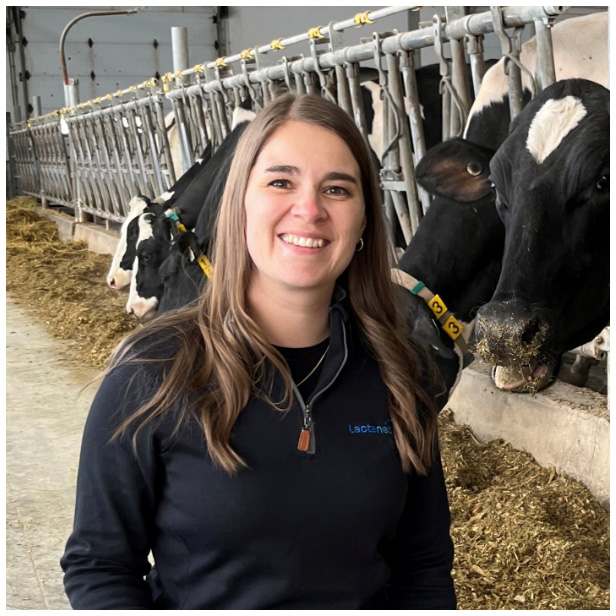
Cindy Jaton
Lactanet Director, Genetics & Traceability
What inspires you the most about your job?
Coming from a farm background, I’m inspired by the chance to continue supporting dairy farmers across the country through work that strengthens traceability and data integrity. What really makes it rewarding is working alongside such a dedicated team. My coworkers inspire me just as much as the work itself.
How has this job helped you to see the importance of traceability?
This role has shown me how valuable traceability can be in situations like disease outbreaks. Being able to quickly follow data and animals helps limit the impact and provides an important layer of security for the industry.
Mélissa Lalonde
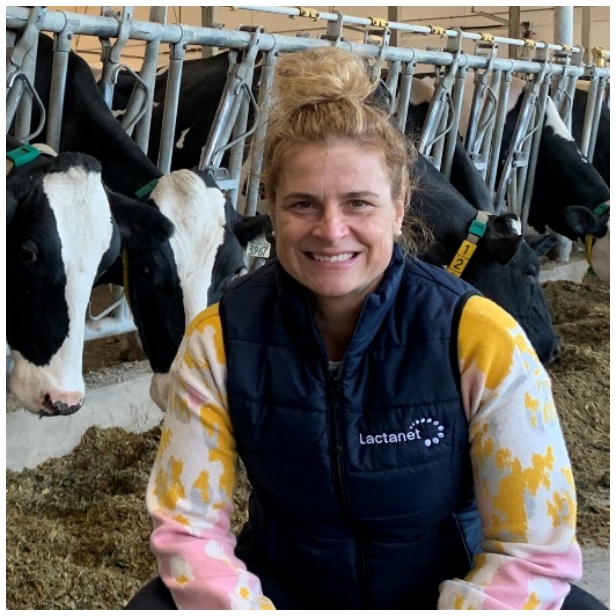
Mélissa Lalonde
DairyTrace Senior Advisor- Traceability
What do you like best about your job?
It’s very inspiring working with dairy farmers as I feel a connection with the values and life principles that they have. I also really enjoy working with so many knowledgeable people in the dairy industry and with other commodity groups. It’s a very collaborative environment.
What are you most excited about in terms of the future of DairyTrace/traceability?
I’m most excited about the value-added projects we are working on and the potential to add value to all the hard work producers have been doing. DairyTrace is so much more than a database and we are excited to expand on all that it can offer. We also have a data integrity project underway, as this will help ensure we can respond quickly and effectively if there’s an animal health emergency.
Mackayla de Kwant
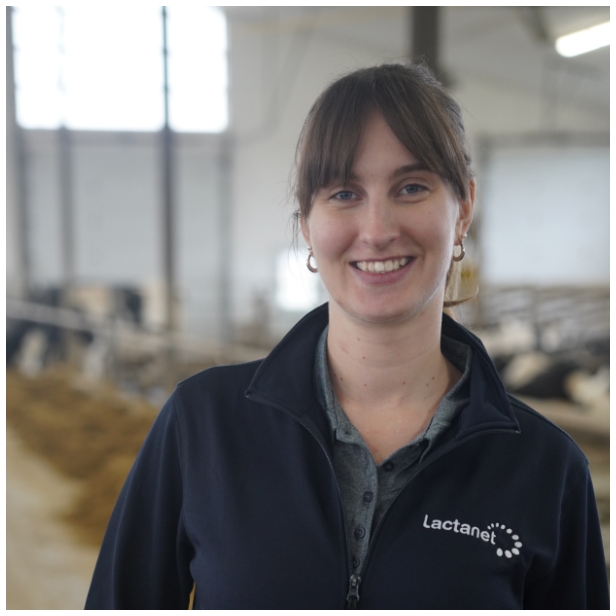
Mackayla de Kwant
DairyTrace Program Manager
What do you like best about your job, or what inspires you the most?
Since I did not grow up on a dairy farm, I like that every day I am always learning something new from dairy farmers about this industry.
How has this job helped you see the importance of traceability?
As Program Manager, I can now see all the different perspectives regarding traceability, (ie. consumer, farmer, government), and appreciate how everyone’s efforts come together to protect the future.
Brian Van Doormaal
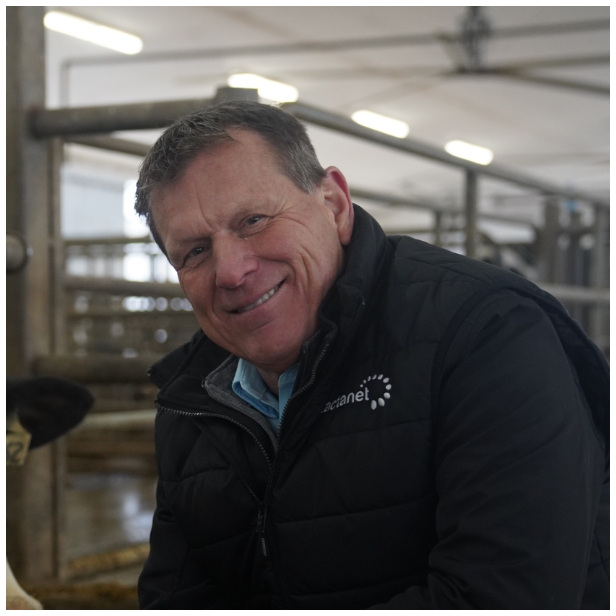
Brian Van Doormaal
Lactanet Chief Services Officer
What inspires you the most about your job?
I've been privileged to work in the dairy cattle industry for over 38 years, with a focus on genetic improvement and traceability. Being born and raised on a dairy farm, my main goal has always been to help Canadian dairy farmers be successful in providing high quality, safe and nutritious dairy products to consumers.
How has this job helped you to see the importance of traceability?
During my career, I've witnessed the impact of a disease outbreak, in Canada and other countries. National traceability is critical for mitigating the negative impact of a future disease outbreak ... not IF it happens, but WHEN it happens.
Meet the DairyTrace customer Services Team
Janice Kyle

Janice Kyle
DairyTrace Customer Services Team Lead
Do you have a dairy farm background?
Yes, I grew up on a dairy/poultry farm and knew that I wanted to live on a farm for the rest of my life. My husband and I own a beef, sheep and cash crop operation and my husband grew up on Ashlawn Farms, a Jersey farm, where he does some share cropping with his brother’s family.
How has this job helped you see the importance of traceability?
By personally living through the BSE crisis as a beef farmer, I completely understand the importance of traceability. The dairy industry needs to be commended for being so proactive and implementing the DairyTrace program which gives clear traceability of animals born on dairy farms and follows them to retirement. Traceability prepares for possible disease outbreaks in the future. It also is very beneficial in the case of any emergency, fire, flood, hurricane as it provides valuable information where the animals are located.
Christopher Grice
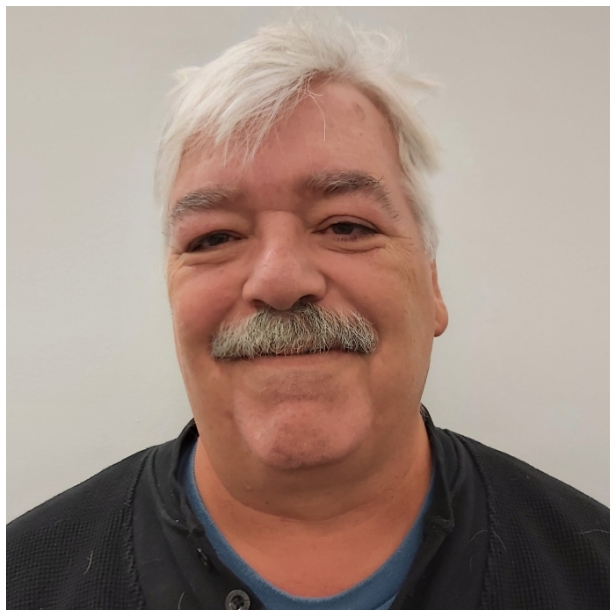
Christopher Grice
Customer Services Representative
What do you like best about your job?
Working with an amazing group of colleagues supporting an important pillar of our dairy industry.
What is the top question you get asked by farmers?
Can I still use a yellow beef tag on my animals slotted for processing other than dairy? and Why do I have to purchase these new white tags?
How has this job helped you see the importance of traceability?
Through interactions with dairy producers and other supporting groups (fair organizers, abattoirs, livestock brokers, etc.) I understand how traceability impacts all facets of the dairy industry.
Carol Paquette

Carol Paquette
Customer Services Representative
What do you like best about your job?
I love the working environment. The customers and my co-workers are great to work with.
How has this job helped you see the importance of traceability?
I am still learning about traceability. I must admit that I have much more respect for the agricultural industry.
Heather Thompson

Heather Thompson
Customer Services Representative
What do you like best about your job?
The best parts of my job are working with an amazing group of people and connecting with dairy producers every day. I really enjoy helping with event reporting, ordering tags, and finding solutions when issues come up. It feels good to be a part of something that supports farmers.
How has the job helped you see the importance of traceability?
Working at DairyTrace has really helped me see just how crucial traceability is to the dairy industry. When issues arise, being able to quickly track an animal’s movements from birth to death can make a huge difference. It’s clear to me that traceability helps protect farmers, consumers and the industry as a whole and I enjoy being a part of it.
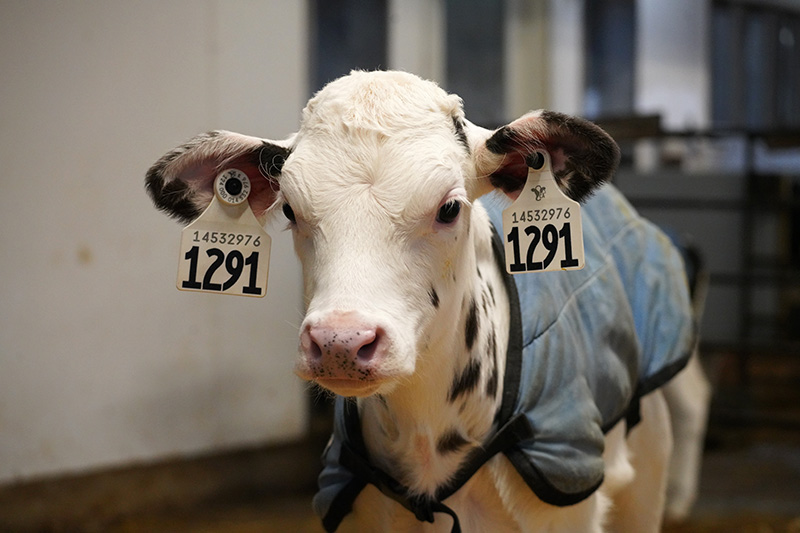
What is DairyTrace
Traceability data collected by DairyTrace is stored for emergency management and other industry value‐added purposes. This information is required by the Federal Government as Part XV of the Health of Animals Regulations of dairy cattle animals in Canada under the direction of the Canadian Food Inspection Agency (CFIA), as well as by DFC as part of proAction.
About Lactanet
Lactanet Canada (www.lactanet.ca) provides dairy producers with innovative herd management products and services to maximize productivity and profitability.
Lactanet offers a wide range of options for milk recording, herd management, diagnostic lab testing, traceability, genetics, and breeding to deliver quality milk and strengthen the productive life of the herd.
Who is Lactanet?
Governance
Lactanet is a not-for-profit organization with nine elected/appointed Board of Directors who are all licensed dairy producers in Canada. This governance structure helps guide Lactanet in achieving its vision and mission.
The Lactanet Board of Directors has established a DairyTrace Advisory Committee that includes producers, representatives and experts from various dairy industry organizations.
With traceability being part of the six key modules within proAction®, Dairy Farmers of Canada has both a proAction® Committee and a Traceability Technical Committee that are linked to the DairyTrace program.
proAction®
proAction® is the national quality assurance program for the Canadian dairy sector.
Dairy Farmers of Canada developed proAction® to provide a framework for high standards of farming. The proAction® traceability module includes requirements for dairy farmers to report their traceability data to DairyTrace.

DFC Pride in proAction®
proAction® supports protecting animal health, reducing environmental impact and producing the highest quality products. It’s a commitment to our customers, animals and the environment.
Partners
Our partners include agricultural producers, dairy organizations, and representatives from industry and government. Together they collaborate to identify best practices that will protect farmers, dairy herds, consumers and the Canadian dairy industry.
Responsible dairy farming is more than milking cows.
Our traceability partners work collectively to choose dairy cattle tags, decide how to best automate as well as deliver outstanding service to producers. Additionally, our partners provide convenient and efficient options for producers and affiliates to record and report dairy traceability data.
Meet Our Partners
Canadian Food Inspection Agency (CFIA)
- Federal government body responsible for the National Livestock Identification and Traceability (TRACE) Program.
Agriculture and Agri-food Canada (AAFC)
- A federal government department who has provided financial support through the Canadian Agricultural Partnership (CAP).
Lactanet Canada
- Responsible administrator for national dairy cattle traceability, through DairyTrace, as approved by CFIA.
- Offers software, tools and application solutions to record and report traceability data.
- Contracts Holstein Canada and Attestra to deliver bilingual customer service support and dairy cattle tag distribution.
Dairy Farmers of Canada (DFC)
- Responsible for the traceability module of proAction® and federal government liaison.
DFC Provincial Associations
- Direct provincial link to dairy producers across Canada.
- Delivers proAction® traceability training and education and be ambassadors of DairyTrace.
- Manages the validation/audit process and registration of farms related to proAction®.
Attestra
- Records and reports dairy cattle traceability activity, including the sale and distribution of animal tags, automation tools and software solutions in Quebec.
- Bilingual customer services for SimpliTRACE and DairyTrace in Quebec.
- Manages dairy cattle traceability data in accordance with federal and provincial regulations for DairyTrace.
- Technical developer of the DairyTrace database, portal, mobile app and performs information transfer protocols with key stakeholders.
Holstein Canada
- Reports dairy cattle traceability activity, including the sale and distribution of tags, automation tools and software solutions in all provinces except Quebec.
- Bilingual customer services for DairyTrace and the DairyTrace tag program in all provinces except Quebec.
Canadian Cattle Identification Agency
- Reports dairy cattle traceability activities from non-producer stakeholders outside of Quebec, with information transfer protocols to DairyTrace.
Appreciation to Agriculture and Agri-Food Canada for funding through the Canadian Agricultural Partnership (CAP), a federal, provincial, and territorial initiative.
FAQ
About DairyTrace
What is livestock traceability in Canada?
Traceability is the process of following an item or a group of items – be it animal, plant, food product or ingredient – from one point in the supply chain to another, either backwards or forwards. The concept was introduced to the dairy industry about 25 years ago for emergency management and to respond quickly to animal health, public health and food safety issues.
What is DairyTrace?
DairyTrace is the national dairy cattle traceability program for all animals born on dairy farms.
It is required that all dairy farmers report their traceability events to DairyTrace.
How does traceability work?
Traceability is based on three pillars:
- Premises identification
The identification of sites where animals are born, kept, assembled or disposed. - Animal identification
A unique lifetime identification number applied to each animal. - Record and report animal movement
Reporting animal movement events with premises and tag identifications.
Are all cattle tagged within the dairy sector?
It is mandatory for all calves born on Canadian dairy farms to be identified with a unique tag number at birth and this number stays with them throughout their lifetime. In fact, traceability affects over 1.4 million dairy cows on over 10,000 farms.
Dairy industry facts: https://www.dairyinfo.gc.ca/
How do DairyTrace and proAction work together?
Traceability is one of six modules of the Dairy Farmers of Canada (DFC) proAction® initiative, which establishes premises identification, tagging, recording and reporting requirements for dairy producers across Canada. DairyTrace provides the national database that dairy farmers report their traceability data to. Aligned with these proAction® requirements, the DairyTrace program is run by Lactanet Canada, as the responsible administrator for dairy cattle traceability, maintaining the database while offering the tools and services for a national traceability system.
Is traceability regulated?
Under federal regulations and/or the proAction requirements, everyone who owns or has the possession, care or control of dairy cattle must report animal identity, movement, location and custodianship information to DairyTrace. Dairy producers and other stakeholders have various options when submitting traceability information. These methods may differ to respect government regulations in their respective province.
Why should I use white DairyTrace tags on my operation?
Tags are part of an effective traceability system, which better protects and supports industry market access, competitiveness and consumer confidence. Dairy bovine tag numbers can easily be tracked in DairyTrace, which has the potential for value‐added opportunities in the future, including traceback.[
My DairyTrace Account
What is my username and password?
When logged into your account, your username will appear on the top right-hand corner of your DairyTrace online portal. If you forget your username and cannot log into your account, contact DairyTrace Customer Services for assistance.
If you forget your DairyTrace account password, it can be reset from the log in page by clicking Forgot your password? You will be required to enter the email address associated with the account username and respond to an access security question. Once completed, a link to reset your password will be sent to you, which you can then use to log in to the DairyTrace portal. If you need further assistance, please contact Customer Services at 1‐866‐55‐TRACE (1‐866‐558‐7223).
Where do I find my DairyTrace proAction report for my validation visit?
When you log in to your online DairyTrace account, you will be able to find the proAction report immediately on the Welcome page. It is listed as one of the bottom “link” items. If you do not have online access, contact customer services and they will print the report and mail, fax or email it to you.
The following YouTube video also will assist you. https://youtu.be/gxw3RwrGRFo.
Event Reporting
How will I report traceability events to DairyTrace?
Reporting has never been easier and you have several options. Our newly developed DairyTrace app, on-line portal, and other on‐farm herd management software programs, can provide the convenience of automated reporting.
For producers needing non-electronic options for reporting, paper forms can be downloaded from the DairyTrace web site or ordered from customer services and submitted to DairyTrace by mail, fax or email.
Other industry partners, such as breed associations, can also receive, send and report event information to the DairyTrace database on your behalf for registered animals. Alternatively, you can also report directly to DairyTrace by contacting our customer service center by mail, phone or email.
Is DairyTrace reporting different in Quebec?
Quebec has its own provincial traceability regulations, therefore if you live in Quebec, there is no change and you will continue to use SimpliTRACE. This data will be transferred to DairyTrace behind the scenes.
What are the timelines for dairy farmers to report events?
Government, farmers, and other industry stakeholders (processors, transporters, etc.) all have a role in ensuring that we can rapidly trace back any issue. As a result, there are time interval requirements for reporting events. For dairy farmers, these requirements are established by Dairy Farmers of Canada within its proAction® traceability module.
To summarize, dairy farmers must report the following events within seven (7) days of the event occurring on their premises:
| Event Type | Time | |
| Tagging | Cross reference (previous tag number is known) | 7 days |
| Tagging | Replacement (previous tag number is not known) | 7 days |
| Movement | Move-in | 7 days |
| Movement | Import | 7 days |
| Movement | Move-out (currently optional but recommended) | 7 days |
| Tag Retirement | On-farm disposal | 7 days |
| Tag Retirement | Export | 7 days |
Dairy farmers must report the following event within 45 days of the event occurring on their premises:
| Tagging | Tag activation / Birth | 45 days |
Tag activation/birth must be reported sooner if the animal leaves the premises before 45 days of age. Event type reporting applies to both female and male animals.
Do dairy farmers have to report when a tag is reissued?
A tag reissue event applies when a new replacement tag with the same tag number is reapplied to the same animal’s ear.
In the DairyTrace system, when a tag reissue is ordered, and the tag is reported as shipped to the farm, the tag number will automatically appear in the farmer’s tag inventory. After seven (7) days of appearing in the tag inventory, the associated tag reissue event will be automatically created. Farmers are encouraged to report such reissue events themselves through their usual reporting method.
Does Holstein Canada and other breed associations report events for me?
Only registered animals have their tag activation/birth event automatically submitted to DairyTrace via the breed associations. For reporting compliance keep in mind the traceability time frame of 45 days after birth to report. Breed associations can also receive, send, and report other event information to the DairyTrace database on behalf of dairy farmers for registered animals. Alternatively, traceability events can be reported directly by contacting the DairyTrace customer service team by mail, phone, or email.
What other options are there for reporting events?
Please see the Reporting Methods Guide for all the options.
Do dairy farmers have to report when bull calves leave?
When an animal leaves your premise to another location in Canada, this is considered a move-out. Move-out reporting is recommended since it will keep your herd inventory and additional DairyTrace reports up to date.
It should be noted that reporting a tag activation/birth event is required for all animals born on the farm to be compliant with proAction® requirements. This includes all bull and heifer calves, including dairy on beef crossbred calves that must be identified with a white DairyTrace RFID tag.
Do dairy farmers have to report deaths when cows go to the auction?
On-farm disposal/tag retirement reporting confirms that an animal bearing a unique tag number has died on your premises. Additional information can be included with the tag retirement event, such as if the animal was buried or composted, for personal usage, or death by predation. Reporting on-farm disposal events confirms the animal is no longer active in the national traceability database.
If the animal is not disposed of on your premises, i.e. it went to a rendering plant and/or a deadstock collection centre, it is considered a move-out event. Reporting a move-out event is highly recommended. Also, when an animal leaves the premises for auction, it is considered a move-out event, which is recommended to report.
Watch this short video on using the DairyTrace Premises search tool:
Is there an easy way to find PID numbers?
When creating a DairyTrace account, users have the option to authorize that their Premises ID can be made available to other DairyTrace users for reporting traceability events. By authorizing your Premises ID for inclusion in the DairyTrace Public Premises Search tool, your Premises ID number(s) will be searchable only by other users. This will help to complete the reporting of movement events and improve the accuracy of the national traceability system.
To search for a Premises ID, watch this short video on how to use the DairyTrace Premises search tool:
When an animal leaves my premise, will I be notified if the receiver reports a move-in?
Once an animal’s move-in event is reported, the animal record associated with the tag will be moved out of your on-farm inventory in the DairyTrace system. You will NOT see the move-in event, but you may notice that the animal is no longer linked to the inventory of your premises. The animal is now under a new premises identification number in the DairyTrace system.
By reporting move-out events in your DairyTrace account, which is a recommended practice, this ensures your animal inventory is always up to date.
How can I report traceability events if I do not have access to a computer or internet?
For users needing non-electronic options for reporting, DairyTrace Customer Services can assist you with your reporting needs. In addition to reporting by phone at 1‐866‐55‐TRACE (1‐866‐558‐7223), paper declaration forms can be downloaded from dairytrace.ca or requested from customer services. These paper forms can be submitted to DairyTrace by mail, fax or email (info@dairytrace.ca).
Connect with DairyTrace


DairyTrace
660 Speedvale Avenue West, Suite 101
Guelph, Ontario N1K 1E5
© DairyTrace 2026 | Contact Us | Privacy Policy